Contents
- 1 What is a Non-Surgical (Liquid) Nose Job?
- 2 What Are the Limitations of a Non-Surgical Nose Job?
- 3 The Fundamental Problem: Most Patients Want a Smaller Nose
- 4 Dr. Ghersi’s Honest Perspective on Liquid Rhinoplasty
- 5 The Serious Risks of Repeated Filler Injections in the Nose
- 6 Who Is Actually Performing Liquid Rhinoplasty?
- 7 Does Having Filler Make Future Rhinoplasty Harder?
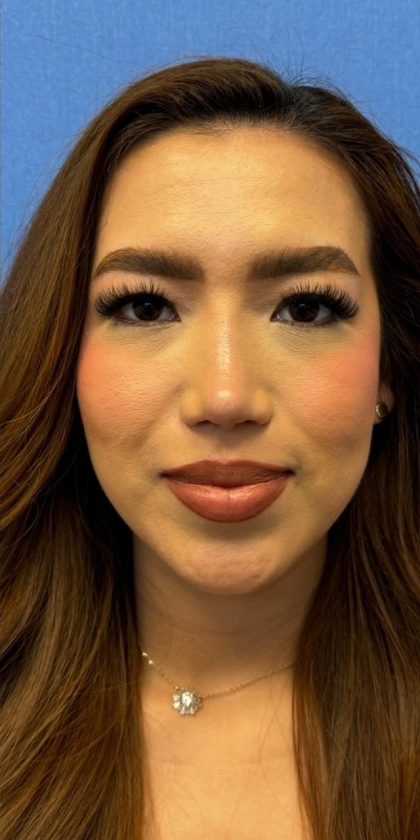
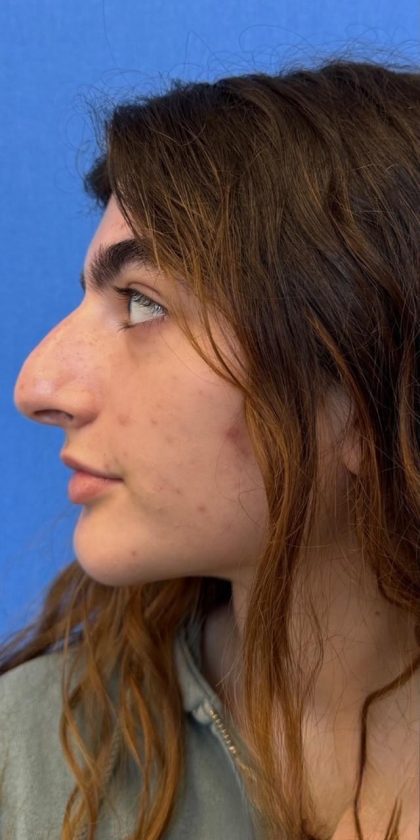
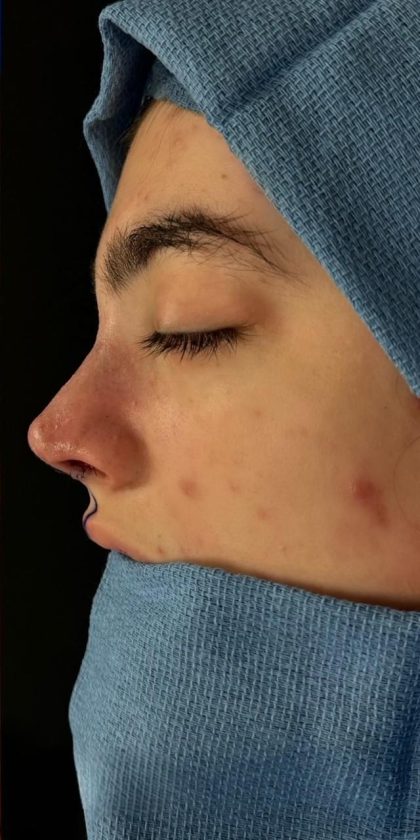
- 8 Before and After Photos
What is a Non-Surgical (Liquid) Nose Job?
Non-surgical nose jobs use dermal fillers to reshape certain areas of the nose. It is a quick, non-invasive procedure.
What a non-surgical nose job can improve:
- It can hide the dorsal hump if it is small by being injected near the eyebrows to create a straighter look of the nose.
- It can correct mild asymmetry.
- It can smooth minor aesthetic imperfections.
What Are the Limitations of a Non-Surgical Nose Job?
- Cannot reduce the size or projection of the nose
- Cannot help with the reshaping of the nasal tip
- Cannot improve breathing or deviation
- Does not provide a permanent solution
The Fundamental Problem: Most Patients Want a Smaller Nose
Most rhinoplasties are reductive. That means that the overall goal of the procedure is to reduce the look of the nose, whether it’s the bridge, the tip, or the projection. Adding filler does the exact opposite; it adds volume.
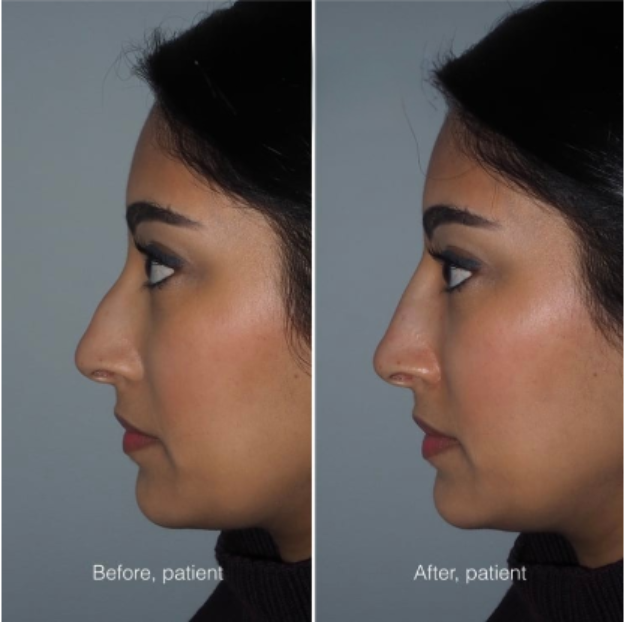
Filler can hide asymmetry, usually in the dorsal hump, by injecting hyaluronic acid above and below the hump to create the illusion of a straight bridge. This results in an overfilled nose that is wider, heavier, and doesn’t look natural. Especially from the side, the nose looks larger. It’s neither aesthetic nor in harmony with the face.

Dr. Ghersi’s Honest Perspective on Liquid Rhinoplasty
As a surgeon who performs almost 500 surgeries per year and has the only rhinoplasty fellowship in Florida, Dr.Ghersi isn’t opposed to filler in the nose under one condition:
- One-time trial for nervous patients: If a patient is nervous about getting rhinoplasty and needs to visualize the results, Dr. Ghersi offers a conservative treatment to bridge the anxiety-based gap.
The side effects of the dermal fillers are seen once the patient undergoes more than one injection.
The Serious Risks of Repeated Filler Injections in the Nose
- Blindness – The filler is placed near a blood vessel in the nose that connects to the ophthalmic artery. If that filler gets into the vessel, it causes permanent blindness. This isn’t theoretical; it has happened in many cases worldwide.
- Skin Necrosis – The death of skin tissue caused by restricted blood flow. The skin becomes hard and discolored (black, gray). This can also be an irreversible side effect of repeated injections of a nasal filler.
- Scar Tissue – Repeated injections create excessive buildup that makes future rhinoplasties more difficult. Even if the patient dissolves the filler, residue remains.
- Infection – Repeated needle punctures increase the risk of bacteria.
- Filler Migration & Distortion – Over time, all filler migrates. The nose becomes lumpy, wide, and is very hard to fix surgically.
Who Is Actually Performing Liquid Rhinoplasty?
Most liquid rhinoplasties are not performed by plastic surgeons. Instead, they’re done by dermatologists, nurses, physician assistants, OBGYNs, and med spa injectors. These providers don’t have a deep understanding of nasal anatomy and are more prone to causing permanent side effects like blindness and skin necrosis.
Does Having Filler Make Future Rhinoplasty Harder?
Yes.
- Leftover filler on the nose alters the tissue and covers the natural anatomy of the nose.
- Repeated injections can cause scar tissue or less elastic tissue.
Most surgeons recommend dissolving your fillers, waiting a few months, and then getting your rhinoplasty.
What is Surgical Rhinoplasty and How Does It Differ?
Rhinoplasties permanently improve your nose, aesthetically and functionally. It doesn’t mask the imperfections; it fixes them.
If your goal is a permanent, precise, natural result, the best and safest route is a surgical rhinoplasty by an expert like Dr. Ghersi.
Ready to take the next step? Visit www.aeris.co or call (305) 446-7700
Request Consultation