
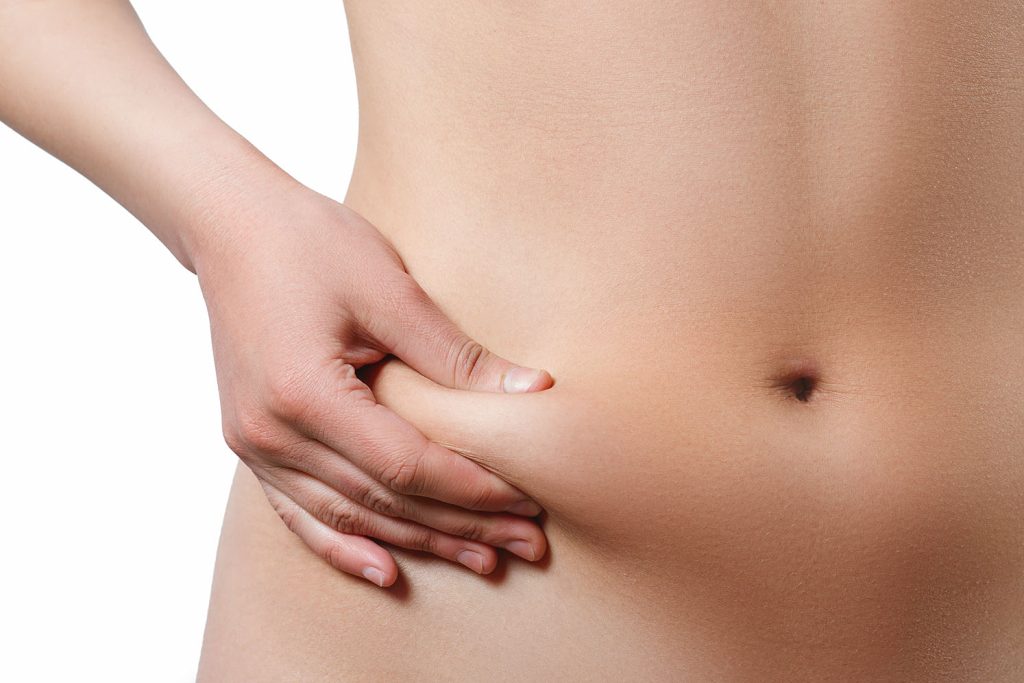
Two patients can come into Aeris with identical complaints, ‘I want a flatter stomach, ‘ and walk out with completely different surgical recommendations. That’s not inconsistency. It’s the right approach. Because the procedure that will actually deliver the result you want depends almost entirely on one factor most patients don’t think about: skin elasticity.
Understanding this distinction before you choose a procedure can save you from a result you’re disappointed with and help you invest in the one that will genuinely change how you look.
Contents
Two Patients, Two Different Answers
Dr. Carlson saw two women on the same day who both wanted to address their midsection. The first was in her early thirties, had never been pregnant, had a small but persistent fat deposit in her lower abdomen that hadn’t responded to exercise, and her skin had excellent recoil. It snapped back when pulled and released.
The second patient had two children, had lost thirty pounds over the past year, and had loose, crinkled skin below her belly button that wrinkled when she bent forward. Her fat deposits were minimal. The issue was the skin itself.
The first patient was an ideal liposuction candidate. The second needed a tummy tuck. Performing liposuction on the second patient would have worsened her appearance by removing volume that was giving the loose skin some structure. Both left with completely different plans, and both achieved excellent results because the procedure matched the actual problem.
What Skin Elasticity Is and Why It Matters
Skin elasticity is the skin’s ability to contract and conform to a new shape after the volume beneath it changes. When you remove fat through liposuction, the skin needs to retract to fit the new contour. If it has strong elasticity, it does this naturally and the result looks smooth and defined.
If elasticity is poor, whether that is due to age, pregnancy, significant weight loss, or genetics, the skin cannot contract sufficiently. This leads to loose, hanging, or wrinkled skin after liposuction, which can look worse than the original concern.
How to Know Where You Fall
You can do a rough self-assessment at home. Pinch the skin of your lower abdomen and release it. If it snaps back quickly and feels firm, your elasticity is likely good. If it moves slowly, stays creased, or has a crinkled texture when you bend forward, elasticity may be a limiting factor for liposuction alone.
But the definitive assessment happens in person. Dr. Carlson evaluates skin quality as part of every body contouring consultation, including how the skin moves, how it responds to compression, and how it has been affected by pregnancy, weight changes, or prior procedures.
When Combining Both Makes Sense
Some patients benefit from a combination of liposuction and a tummy tuck. Lipo can be used to address fat deposits in adjacent areas, while the tummy tuck removes excess skin and tightens the abdominal wall. This combination is common in mommy makeover procedures and in patients who have lost significant weight.
The Benefit to You
Choosing the right procedure means getting the result you’re actually aiming for. There’s no point in committing to a recovery if the procedure isn’t matched to what your body actually needs.
Schedule a consultation with Dr. Carlson at Aeris to find out which approach is right for you. Call (305) 446-7700 or fill out our consultation form.